
 1300 066 677
BESS4 Commercial Battery Incentive for NSW Businesses

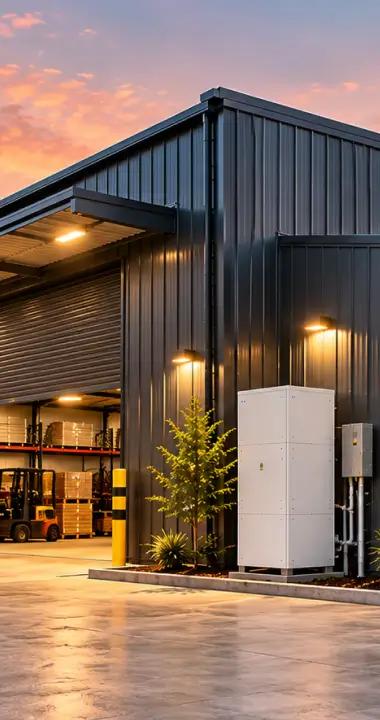
Explore business battery storage with 1 Stop Solar. A battery can give your business more choice over when it uses electricity. Store available surplus solar for later, or assess a charging strategy that suits your electricity tariff and operating hours.
Under BESS4, qualifying NSW business battery installations may receive an upfront discount through the Peak Demand Reduction Scheme. The opportunity depends on the premises, the proposed equipment and the installation meeting the rules.
Talk to 1 Stop Solar about your electricity use, existing solar and storage goals. Ask for a proposal that explains the complete system, installation work and any available incentive.
| Location | Business premises | Usable capacity minimum | Usable capacity maximum | Customer contribution |
|---|---|---|---|---|
| NSW grid connected site | Eligible non-residential site | Greater than 20 kWh | 200 kWh | At least $5,000 excluding GST per implementation |
These are headline checks, not confirmation of approval. Capacity is assessed using the scheme's usable capacity definition. Equipment, previous site activity, installer, approval and documentation requirements also apply. The minimum contribution is not a quoted system price.
A battery can hold available excess solar for evening trading, early starts or other periods when generation is lower. The benefit depends on how much surplus energy is available and when your business needs it.
Where electricity prices vary by time, storage may help reduce purchases during expensive hours. Charging costs, lost energy during conversion and your tariff need to be considered when estimating the financial result.
Some businesses pay demand charges as well as usage charges. A battery with appropriate power output and controls may help limit grid demand during busy periods. Storage capacity alone does not show whether it can manage those loads.
The battery location, cable routes, switchboard and available electrical supply all affect system selection. A suitable installation needs safe access, required clearances and equipment compatible with the rest of the energy system.
Longer opening hours or new equipment could change your energy needs. Include those plans in the assessment. Any later battery expansion must remain within equipment limits and meet the requirements applying at that time.
Start with the energy you want to shift, rather than the largest battery available under the incentive. A workshop that closes at 4 pm may need a different system from a restaurant trading late into the evening. Review electricity bills, detailed meter readings, and any solar export data. These can show when you buy power, how much generation leaves the site and whether storage could serve a useful load later. Two measurements matter. Battery capacity, measured in kWh, describes the amount of energy stored. Battery power, measured in kW, describes how quickly energy can be delivered. Both need to suit the intended job. A large battery can be poor value if it is rarely charged or discharged. A smaller system may leave useful surplus solar uncaptured. Compare the proposed size with realistic operating conditions and the total installed cost.
Existing panels may provide a useful starting point for battery storage. Before choosing equipment, check how much solar is used immediately, how much is exported and when the business still imports electricity. The existing inverter may not connect directly to a new battery. Its model, electrical configuration and compatibility need to be checked. Additional equipment or changes to the switchboard may be required. For businesses planning extra solar, BESS4 can provide a higher incentive pathway where eligible new capacity is installed within 90 days before or after the battery. Solar sizing conditions also apply. Keeping existing panels alone does not satisfy the new solar requirement.
Backup should be discussed as a separate design requirement. A grid connected battery does not automatically keep equipment running when the network goes down. A compatible backup arrangement may supply selected circuits, such as agreed refrigeration, lighting or communications equipment. The design must account for starting loads, continuous power demand and safe separation from the grid. The running time depends on stored charge, reserve settings and the equipment operating. Ask which loads are included in the proposal and what limits apply. Avoid assuming the battery can operate the entire premises.

Warranty cover depends on the battery, inverter and configuration selected. Review the actual documents for the proposed equipment, including product cover, performance conditions, energy throughput limits and exclusions. BESS4 has its own equipment and warranty requirements. A product's advertised warranty term alone is not enough to confirm compliance. The participating provider must check the complete installation against the current rules. Keep invoices, serial numbers, installation records and warranty documents together. Follow the manufacturer's operating instructions and use the stated support process if a fault occurs.
A useful quote includes the full installation. Battery hardware is only one part of the cost. Inverter equipment, switchboard changes, cabling, mounting, site access and backup circuits can all affect the price. Ask for system inclusions, additional electrical work, any proposed BESS4 discount and the amount you will pay to be shown separately. Any savings estimate should explain the tariffs and operating assumptions used. The BESS4 rule requires a net customer payment of at least $5,000 excluding GST per implementation. This is a minimum contribution towards the project, not a fixed rebate, deposit requirement or complete installation price. The final cost can be higher.
BESS4 is part of the NSW Peak Demand Reduction Scheme. An Accredited Certificate Provider, known as an ACP, can create Peak Reduction Certificates for a qualifying installation. Certificate proceeds help support the discount offered through participating installers.
The site must be connected to the NSW electricity network and must not be a residential building or data centre. Combined scheme usable capacity must be above 20 kWh and no more than 200 kWh. Approved battery listing, technical design, installer accreditation and electrical licensing requirements apply. Necessary planning and network approvals must be obtained, and previous business battery incentive activity at the site must be checked. Battery only projects may qualify. The size of the discount depends on the approved design, certificate calculation and the commercial offer. Complete the required nomination paperwork before installation; do not assume completed work can receive a retrospective discount.

It supports qualifying battery installations at NSW small and medium business premises under the Peak Demand Reduction Scheme. It is an installation incentive activity, not the name of a battery product.
Offices, shops, warehouses, workshops and hospitality venues may be worth assessing. Eligibility depends on the premises and proposed project, rather than the industry label alone.
The combined usable capacity counted under BESS4 must be greater than 20 kWh. Do not rely on an advertised model size: the provider needs to calculate the scheme capacity of the complete configuration.
No. Battery only installations may qualify. The business case still needs to account for charging costs, tariffs, equipment and how the stored electricity will be used.
Possibly. Eligible new or additional solar installed within 90 days of the battery may support the higher incentive calculation. The new solar must also meet the applicable sizing requirement.
Not automatically. The provider must check the existing equipment, proposed additional capacity and any previous business battery incentive activity at the site.
No. The quoted discount varies with the project and provider arrangements. Ask for written confirmation of the proposed benefit and the remaining project cost.
No such outcome should be assumed. Your bill can still include grid usage, supply charges and other costs. Any estimate needs to reflect actual consumption, tariffs and battery operation.
Provide your postcode, recent electricity bill, opening hours and details of existing solar or batteries. Explain whether your priority is solar use, tariff management, peak demand or selected equipment backup.

